Between the World and Me
Encounter a father’s account of the history, fear, learning, relationships and questions he wants to pass to his son, without treating his life as a script his son must repeat.
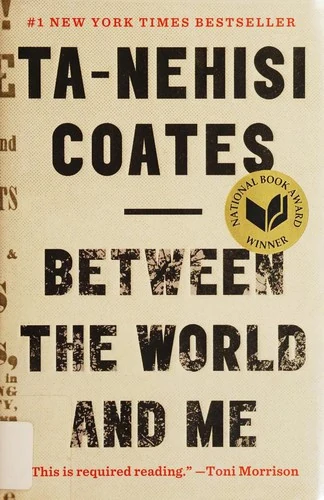
Read the decisions beneath the cover.
A particular addressee can supply continuity across memoir and public argument when the relationship changes the scenes, transitions and limits of what the narrator offers.
Especially useful for: Writers of memoir or personal essays connecting remembered experience, intellectual revision and a sustained public question.
How the decisions work together
The son is both recipient and, at key moments, participant. Within that continuing relationship, Coates preserves earlier interpretations and revisits the same material so education appears as a change in what he can see. The ending returns from another person’s loss to counsel whose limits remain explicit.
- Establish the letter and the education
The son’s moment in life leads into the father’s childhood, reading, Howard years and revisions.
- Test the account in encounters and loss
Prince Jones, reporting, parenting and travel put the bodily concern into changing situations.
- Listen, then return to the recipient
The visit to Mable Jones precedes a final return to the son and the limits of what struggle can promise.
2 decisions worth studying.
Start with the choice. Open its application and limits, or follow the source example.
Let one continuing addressee organize the public argument
Address a particular person throughout a work, and repeatedly make that person’s circumstances, memories and relationship to the narrator determine why a scene or argument is being told now.
Explore the decision, application & limits
Why this choice matters
The son supplies a stable relationship across shifts of place, time and register. His presence is more than a salutation: the narrator identifies what the son has witnessed, distinguishes their lives, and sometimes makes the son a participant whose presence changes a scene.
Try the decision in your own work
- Define why this recipient needs to hear the work at this moment, using circumstances visible in the text.
- Return to what the recipient knows, remembers or cannot inherit directly when the narrative changes time or subject.
- Let the relationship have consequences in at least one scene and in the ending; preserve the recipient’s difference from the narrator.
Return to the same story after changing the question
Present a concrete scene or artifact, supply a new distinction for interpreting it, and revisit identifiable elements of that same material so the change in reading is visible.
Explore the decision, application & limits
Why this choice matters
Keeping the queen, adviser and bodily arrangement constant lets the change occur in identification and judgment. The reader can locate what the narrator now sees differently instead of receiving only a claim that his education changed him.
Try the decision in your own work
- Show the original reading and what made it attractive to the narrator.
- Introduce the question or distinction that unsettles it, then return to specific features of the same material.
- State what has changed in the interpretation and what remains a recalled or attributed account rather than independently established history.
Every chapter has a job.
Choose a section to see what it adds and which authoring decisions it makes visible.
Chapter III
Coates visits Prince Jones’s mother and reports her account of childhood, professional achievement and loss. He marks uncertainty about her private feelings before reflecting on the meeting, returning to Howard and addressing his son again. The final drive carries the argument back into the landscape and leaves struggle possible without promising that others will change.
Its job in the book
Bring another person’s account into the culmination, then return to the relationship that frames the book.
A decision to study
Keep the witness’s reported words distinct from the narrator’s inference, and make the final counsel answer the opening occasion.
Supplied text · lines 557–627. Summary and role are our analysis.
Link to this chapterThe book’s subject and overall argument
Ta-Nehisi Coates addresses his teenage son while examining what it has meant for him to inhabit a vulnerable Black body in America. Memories of Baltimore, reading, Howard University, friendship and fatherhood provide the route through his argument. The movement is also intellectual: accounts that once offered him security or pride become objects of questioning, and he preserves some of those earlier readings so their revision remains visible.
The death of his friend Prince Jones becomes a central point of return as Coates moves through reporting, parenting, travel and historical reflection. The final section centers a visit to Jones’s mother, then returns to the son and the problem of how to live and struggle without a promised resolution. The book’s political and historical interpretations remain Coates’s arguments; this study concerns how the sustained address, remembered scenes and changes of interpretation organize them.
Keep the relationship between father and son present while moving among memoir, argument and reporting. Let the same remembered material acquire a different meaning as the narrator’s understanding changes, then return to the recipient when defining what the book can offer.
Sources & reading scope
Ta-Nehisi Coates, Between the World and Me; supplied 2015 Spiegel & Grau ebook text, eBook ISBN 9780679645986, version v4.1; all three numbered sections are present.
The completed whole-source AI synthesis supplied candidate observations and the broad argument map. This Codex editorial pass checked original source headings, section boundaries, openings and selected argumentative contexts; inspected every retained example; checked the existing pattern dictionary and base examples; and rewrote or rejected nominations. It is a source-checked editorial pass, not a new independently adjudicated whole-book reading.
- No human or independent-model review has been completed.
- The local extraction has not been compared page by page with a publisher edition; graphical layout and completeness are not independently certified.
- The book’s empirical and historical claims are described as claims made by the author, not independently verified findings of this study.
- Proposed effects on readers are editorial interpretations, not measured comprehension, behavior or longevity effects.
- The source header’s references to excerpts identify permission acknowledgments for epigraph material; they do not identify the volume itself as an abridgment. The local file contains Chapters I–III, the final drive-away paragraph, dedication and author note. Completeness against an external publisher copy has not been independently certified.
- The map preserves the source’s three chapter divisions. Internal subject changes and the concluding drive are not invented as separately titled chapters. The opening poems and borrowed epigraphs are not reproduced.
- The opening note says some names and identifying details have been changed. Recollections, dialogue, interior experience and interpretations are treated as the narrator’s account rather than independently verified events.
- The source identifies a 2015 United States Spiegel & Grau edition. The multiple publisher names in the filename do not establish a different textual edition.
Editorial source check by Codex. No human or independent-model review is claimed. Chapter locations refer to the supplied transcription, not printed page numbers.