“I was misled partly by the analogy…”
The passage retains the attractive first account so the reader can locate the failed inference. Its correction changes the question the remaining explanation must answer.
Passages, structures and practical devices, connected to their books and patterns. Every example keeps its source and review status.
Start with reviewed examples. Select any number to compare, with their source context intact.
Explore guided comparisons ↗“I was misled partly by the analogy…”
The passage retains the attractive first account so the reader can locate the failed inference. Its correction changes the question the remaining explanation must answer.

“I do not find clear evidence…”
The revision changes the unit of judgment from a medium alone to the role it plays and what it displaces. Keeping the original expectation visible lets the reader identify the actual change in the argument.

In the parent chapter, Haidt reconnects screen use to displaced interaction and sleep and explicitly recalls the qualified gaming account from Chapter 7. His discussion distinguishes moderate use from use that interferes with other areas of life.
The later section makes the earlier revision consequential to the book’s application rather than leaving it as a local concession. The test for the writer is whether the distinction survives the move into recommendations.

“two of Tycho’s further observations were inconsistent with Kepler’s orbit…”
The reader is given the initial success, the unresolved measurement and the changed model in sequence. The ellipse is an answer to a demonstrated problem rather than a fact attached to a famous name.

“Within hours of moving in, I was home.”
The new experience corrects an earlier limit of imagination, and the final language keeps the correction from turning into a claim of permanent self-knowledge. The reader can see both changed understanding and the possible return of an old habit.

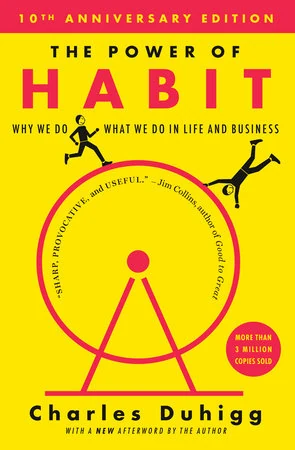
The Febreze team visits a woman with nine cats who does not notice their smell. A useful product is missing the perceived cue the initial explanation assumed.
Chapter 2 does something stronger than illustrating a rule: it teaches an attractive first explanation, shows what it cannot explain, and makes the reader revisit the opening success with a better question.

“I was wrong…”
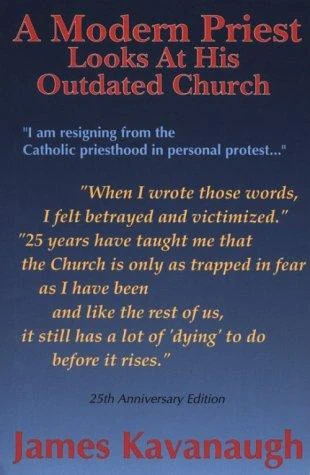
The later information does not remain a sad anecdote. The author returns to his own original decision, changes the response he is prepared to give and explicitly leaves room for the recipient’s conscience to differ. The revision enacts his broader demand that people matter more than impersonal compliance.

“the wrong company…”
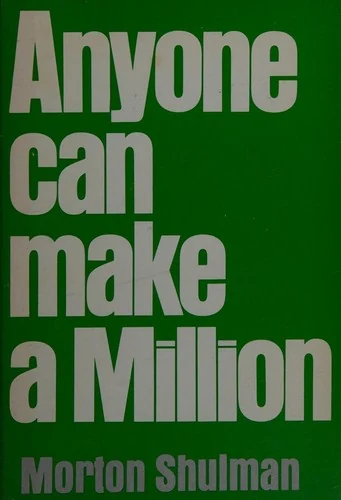
The narrative postpones the disconfirming fact until the apparent win is established. That ordering changes the interpretation of the same transaction: a favorable result remains, but its advertised explanation no longer accounts for it.

“The booklet gives you the complete story.”
The failure is the gap between a procedure treated as sufficient and the consequences the speaker had not considered. Alternating registers lets that gap remain visible: the lyric action changes while the technical and commercial voice continues.

“Where was the science?”
The setback does more than make the narrator suffer: it breaks the explanation that justified his commitment. Revisiting the earlier success prevents the story from simply replacing one profitable anecdote with another without acknowledging what he had believed.

“Soon after, I found out that this was not true.”
The sequence separates acquiring useful information from making an overconfident inference from it. The revision has an observable consequence: the same cable field remains, but the narrator changes the question he asks of it.

“We have tried that and we have failed.”
The retained failure has a consequence for the explanatory model: sound principles do not implement themselves, and divided responsibility requires a different arrangement. The later committee chapter carries the coordination problem forward.

“calling it a band was misleading…”
The analogy responds to a diagnosed error rather than merely decorating a definition. Identifying the learner’s picture lets the revised explanation change what a familiar phrase is taken to mean and what the learner is asked to reconstruct.

“there is no way to speed up understanding…”
The teacher’s admission changes the stated instructional problem: a powerful event must be followed by a process. The subsequent recalled encounters give the revised account a place in the narrative, making the limitation more concrete than a general warning that learning takes time.

Reviewed examples have a source-linked editorial interpretation. Detected candidates are exact passages or structures retrieved by an explicit rule and still need interpretation. Neither label establishes a cause of bestseller longevity. No missing text is counted as a negative example.