A small discrepancy changes the orbit
Present a plausible explanation or expectation, show the observation or evidence gap it cannot account for, and return to the same question with a revised account that changes the later interpretation or application.
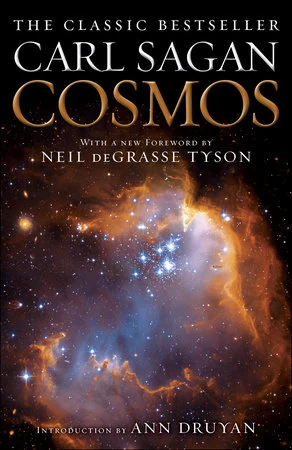
Cosmos
Carl Sagan · 70 weeksA small discrepancy changes the orbit
SHORT SOURCE EXCERPT“two of Tycho’s further observations were inconsistent with Kepler’s orbit”
Sagan first describes why circular motion seemed reasonable and how Kepler’s calculation fitted several observations. Two further observations do not fit; after explaining the size of that discrepancy, the narrative follows the search for a curve that accounts for the same motion.
The reader is given the initial success, the unresolved measurement and the changed model in sequence. The ellipse is an answer to a demonstrated problem rather than a fact attached to a famous name.
The source in context.
Calendars and competing accounts of planetary motion lead into Kepler’s struggle to make a model agree with observations. Newton’s account extends the search from an accurate description toward an explanation of motion.
Open this chapterWhat this example supports
The reader is given the initial success, the unresolved measurement and the changed model in sequence. The ellipse is an answer to a demonstrated problem rather than a fact attached to a famous name.
Its limit
The historical explanation is Sagan’s account. This passage analysis neither checks the original observations nor reproduces Kepler’s calculations.
Source & edition
Carl Sagan, Cosmos; supplied English text, introduction dated May 1980, precise edition unverified.
Supplied text, lines 709–729. The short quotation is checked against the source.
The completed whole-source AI draft supplied the broad architecture and candidate observations. This Codex editorial pass checked the original contents, all thirteen main chapter headings and boundaries, introduction and appendix headings, selected chapter opening/ending contexts, and the full retained example contexts. Existing pattern definitions and already reviewed examples were checked before writing this record. This was a targeted source-checked editorial pass, not an independent whole-book rereading.
Supplied English text with an introduction dated May 1980 and later biographical front matter; precise edition unverified.