THE EXAMPLE INDEX

Find the practice.
See it in the book.

Passages, structures and practical devices, connected to their books and patterns. Every example keeps its source and review status.

Start with reviewed examples. Select any number to compare, with their source context intact.

Explore guided comparisons ↗
199 examples163 reviewed36 detected for reviewSee the corpus coverage ↗
9 examples · 6 books
PassageReviewed example
Return to the same evidence with a new lens ↗
“В тази приказка психето трябва да се справи с девет изисквания.”

The reader can recognize the same event while observing its changed role: a death in the narrative becomes the author’s interpretation of a psychic transition. Later task headings continue this mapping rather than merely attaching a general moral to the tale.

AnalysisReviewed example
Return to the same evidence with a new lens ↗

In the tale, an older woman takes the girl away in a gilded carriage and replaces her handmade shoes and former life. After the tale and its initial commentary, the first numbered trap returns to that carriage and reads its apparent comfort as a form of captivity.

An already encountered object becomes the heading and focal point of the analysis. The reader can compare its place in the action with the new meaning assigned to it, instead of receiving an abstract warning detached from the story.

AnalysisReviewed example
Return to the same evidence with a new lens ↗

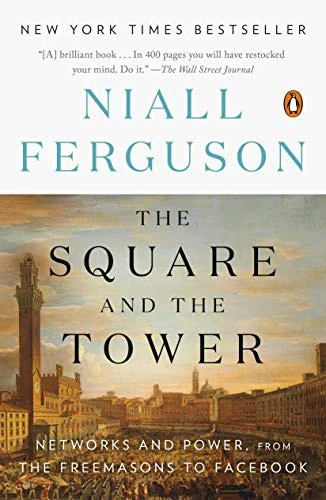
The first account records rapid recruitment, suppression by the Bavarian authorities and the survival of exaggerated claims. Its closing paragraphs already distinguish the order’s limited activity from the spread of its reputation.

This first pass supplies events that can be recognized later and states the evidentiary problem. The useful delay concerns a fuller explanation of those events, not whether the alleged world conspiracy is true.

PassageReviewed example
Return to the same evidence with a new lens ↗
“With these insights of network theory in mind, we can now revisit the history (as opposed to the conspiracy theory) of the Illuminati.”

The explicit return ties a demanding conceptual introduction to observable work: the same order’s growth, contradictions and limited reach can now be described through relations among networks and hierarchies. The return also restates the book’s purpose before the chronological survey expands.

How to read the labels

Reviewed examples have a source-linked editorial interpretation. Detected candidates are exact passages or structures retrieved by an explicit rule and still need interpretation. Neither label establishes a cause of bestseller longevity. No missing text is counted as a negative example.