The gilded carriage returns as an interpreted trap
Present a concrete scene or artifact, supply a new distinction for interpreting it, and revisit identifiable elements of that same material so the change in reading is visible.
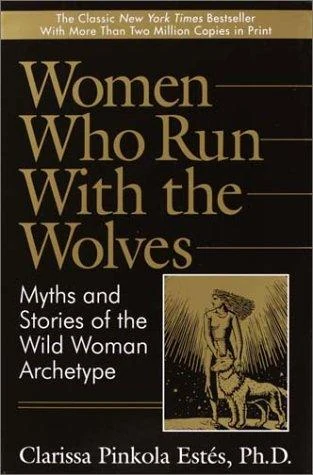
Women Who Run with the Wolves
Clarissa Pinkola Estés · 99 weeksThe gilded carriage returns as an interpreted trap
In the tale, an older woman takes the girl away in a gilded carriage and replaces her handmade shoes and former life. After the tale and its initial commentary, the first numbered trap returns to that carriage and reads its apparent comfort as a form of captivity.
An already encountered object becomes the heading and focal point of the analysis. The reader can compare its place in the action with the new meaning assigned to it, instead of receiving an abstract warning detached from the story.
The source in context.
After defining her term for the formerly captive woman, Estés tells The Red Shoes and interprets its losses and temptations. Eight named trap sections revisit the carriage, the old woman, burned shoes and compulsive dancing within her psychological reading.
Open this chapterWhat this example supports
An already encountered object becomes the heading and focal point of the analysis. The reader can compare its place in the action with the new meaning assigned to it, instead of receiving an abstract warning detached from the story.
Its limit
This is a structural paraphrase of the translated text. The carriage-to-captivity mapping is the author’s symbolic reading, not evidence that a comparable psychological mechanism has been demonstrated.
Source & edition
Clarissa Pinkola Estés, Women Who Run with the Wolves, inspected Bulgarian translation credited to Krum Bachvarov (2001), Bard (2010), ISBN 954-585-212-7; 1-based LF anchors in the supplied extraction.
Supplied text, lines 7836–8111. The description is an original editorial paraphrase, not a quotation.
Read the complete whole-source AI synthesis and the ordered summaries and section maps of all ten submitted segments; checked the supplied contents against every main body heading and inspected section openings and endings. Directly read the Vasilisa and Red Shoes tales and selected subsequent interpretations, the admitted provenance passages and their surrounding contexts, and relevant author-method and qualification passages. English descriptions are this editorial pass’s paraphrases of the Bulgarian source. This is a source-checked editorial pass, not a second complete reading, specialist translation review or independent-model review.
Inspected Bulgarian translation credited to Krum Bachvarov (2001), Bard (2010), ISBN 954-585-212-7; original copyright notices 1992 and 1995. Numbering and extraction anomalies retained; correspondence to an English edition unverified.