Outliers
Look beyond an exceptional individual’s visible qualities to examine the opportunities, institutions and inherited circumstances that the usual success story leaves out.
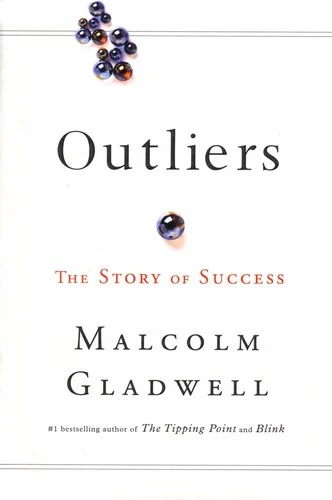
Read the decisions beneath the cover.
Make a change of explanation visible: trace the intermediate conditions, then return to familiar evidence so readers can see what the new question reveals.
Especially useful for: Writers challenging a familiar explanation and teaching readers to inspect reported cases, scenes or data differently.
How the decisions work together
The Roseto introduction prepares the question of what lies beyond the individual. Opportunity then examines how access and selection accumulate; Legacy explores inherited patterns and efforts to alter their effects. Repeated returns to rosters and cockpit exchanges give the explanatory distinctions concrete material to work on. The epilogue applies the same attention to omitted circumstances to Gladwell’s family. These are authoring decisions to study, with the book’s empirical and cultural claims kept separate from craft interpretation.
- Change the unit of explanation
Move from an individual-centered account toward the opportunities and relationships around a person.
- Trace and reinterpret
Explain intermediate conditions and revisit specific evidence through newly introduced distinctions.
- Bring the question home
Consider designed opportunities, then apply the account of omitted advantages to the author’s own family.
2 decisions worth studying.
Start with the choice. Open its application and limits, or follow the source example.
Find the system behind the behavior
Show why an individual-level explanation or solution is incomplete, identify the surrounding incentives or interactions, and trace how they generate the observed outcome.
Explore the decision, application & limits
Why this choice matters
The hockey chapter does more than point to a birth-month pattern. It makes selection and differentiated experience the intermediate steps between relative age and later performance, giving the reader a sequence to inspect rather than a single unexplained correlation.
Try the decision in your own work
- Establish what the individual-level explanation would lead the reader to expect and show the evidence it leaves unexplained.
- Trace the concrete decisions and opportunities between an initial condition and the eventual outcome; label which links are supported and which are inferred.
- State what conditions would make the mechanism absent or weaker, and distinguish the mechanism from any proposed remedy.
Return to the same evidence with a new lens
Present a concrete scene or artifact, supply a new distinction for interpreting it, and revisit identifiable elements of that same material so the change in reading is visible.
Explore the decision, application & limits
Why this choice matters
Reusing the same material gives the explanation an immediate job: show what a reader can now notice or interpret differently. The book does this with a hockey game and with cockpit exchanges; the apparent learning effect is an editorial inference, not a tested result.
Try the decision in your own work
- Choose an initial artifact or scene with details that can be revisited without changing the underlying evidence.
- Teach the distinction through explicit criteria and enough context to show its limits.
- Return to the identifiable details and separate the original material from your added annotation; retain plausible alternative readings.
Every chapter has a job.
Choose a section to see what it adds and which authoring decisions it makes visible.
Harlan, Kentucky
A Kentucky feud introduces the claim that inherited cultural patterns may persist after the conditions that produced them. The chapter moves to reported experiments to connect the historical account with more recent behavior.
Its job in the book
Shift the book from immediate opportunities to inherited patterns of response.
A decision to study
A change of scale needs an explicit bridge between the historical story and the present behavior it is meant to explain.
Supplied text · lines 1788–1923. Summary and role are our analysis.
Link to this chapterThe book’s subject and overall argument
Outliers challenges explanations of exceptional achievement that concentrate only on talent, personality and effort. Its first part follows opportunities that accumulate through selection rules, access to practice, family experience and historical timing. Its second part turns to cultural legacies and to situations where inherited habits interact with institutions and work.
Gladwell builds the argument through reported cases, research accounts, comparisons and returns to earlier scenes. A hockey roster becomes a route into opportunity allocation; cockpit exchanges are reread after communication distinctions have been introduced. A final family story applies the book’s attention to omitted opportunities to the author himself. This study analyzes those explanatory choices without treating the book’s causal claims as independently established.
Opportunity and Legacy organize two sets of explanations; within that structure, familiar stories and artifacts are introduced, reinterpreted and sometimes returned to so that a changed question has a concrete object.
Sources & reading scope
Malcolm Gladwell, Outliers: The Story of Success, second eBook edition, June 2011; LF line anchors in the inspected extraction.
Read the entire existing whole-source AI synthesis, checked all main headings and selected openings/endings in the supplied source, and directly inspected every admitted example with its explanatory context and limitations. The draft was used as nominations and revised where source structure or claims did not support it. This is not a new page-by-page reading or independent-model review.
- The extraction was not compared against a publisher-controlled copy for completeness or layout. The inspected copyright page identifies the second eBook edition, June 2011, including a 2010 reading guide.
- This pass analyzes authoring decisions; empirical claims about achievement, culture, education and aviation remain the book’s claims and were not independently validated.
- Reader effects are interpretations of the sequence, not measured learning, persuasion or longevity effects.
- Outliers and Blink are by the same author and belong to the same development family. Examples from them are not independent author-family observations.
- Selected biographies and national comparisons are not controlled experiments, and a narrated mechanism does not by itself establish causation.
Editorial source check by Codex. No human or independent-model review is claimed. Chapter locations refer to the supplied transcription, not printed page numbers.