
EXACT WORDS · SHORT SOURCE ANCHOR
“even of students who stayed away”
HOW THIS BOOK USES IT
Haidt argues that social-media adoption changes peer interaction opportunities even for nonusers.
↳Trace the conditions that keep producing the same result.
Show why an individual-level explanation or solution is incomplete, identify the surrounding incentives or interactions, and trace how they generate the observed outcome.
Consider this when an individual explanation cannot account for a problem that repeatedly returns.
Tracing incentives and interactions connects separate incidents to the conditions the book asks readers to notice or change.
Beyond providing wider context, specify how the surrounding conditions generate the outcome and where that account could be challenged.
Trace the conditions that keep producing the same result.
All 13 identified examples across 9 books.
“even of students who stayed away”
Haidt argues that social-media adoption changes peer interaction opportunities even for nonusers.

“we must look beyond the poor”
Desmond explicitly shifts the question from describing poor people to examining how more secure groups participate in producing poverty.

“protect the people with the power”
Carlson explains complaint outcomes through institutional incentives, while a later passage acknowledges HR staff who seek to help.

“different incentives”
After explaining low street-level pay, the chapter asks why people would accept the job and connects entry to a small number of highly visible prizes and limited alternatives. It then shows why a foot soldier could pursue a violent reputation that damages the boss’s business.
The apparent contradiction becomes a consequence of interacting positions. The explanation advances beyond the opening wage puzzle to account for conflict inside the hierarchy.

“selection, streaming, and differentiated experience”
After the roster pattern appears, Gladwell explains the January cutoff, the difference in children’s physical maturity, coaches’ selections and the extra coaching and games received by selected players. He later names the compounding process and proposes changes to selection arrangements.
The intermediate decisions make the surrounding system inspectable. The explanatory move shifts attention from an unexplained distribution to a sequence that could produce and amplify it.
“only when 10 families”
Haidt traces pressure from early adopters to classmates and then parents, describing how successive concessions intensify pressure on those who remain. He gives a pledge that becomes binding after ten families in the same school and grade join as an example of changing the social cost, while criticizing its particular age threshold.
The example makes both the reinforcing loop and the proposed coordination device inspectable. The distinction between the design of joint commitment and the author’s preferred age rule prevents them from becoming one undifferentiated recommendation.
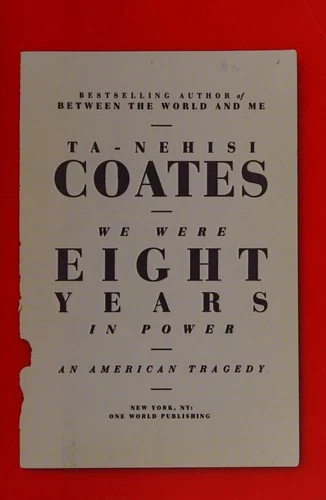
“the family was interacting with something larger”
The Detroit drive places two generations’ memories beside a history of lost industrial jobs and restricted housing options. Coates then describes how imprisonment affects employment, housing and future exposure to incarceration, returning to the inadequacy of treating family structure as a complete explanation.
The passage moves through linked conditions and comes back to the original unit of explanation. Its force as exposition comes from the interactions made visible, not from replacing one total explanation with another unsupported label.
“favorable rulings could mean repeat business”
Carlson argues that private proceedings can keep others from learning about prior complaints and reduce pressure on a company. She then describes asymmetry between a one-time complainant and a company familiar with the process, including the repeat-business incentive she attributes to arbitrator selection.
The chapter supplies linked mechanisms rather than relying only on the character of an individual offender or the courage of a complainant. Information and incentives explain why the book also turns toward institutional reform.
The chapter asks why poor renters do not simply move to a better area, then names emergency moves, application records, credit and discrimination as obstacles. Lakia Higbee’s rent-versus-mortgage example is followed by an account of lenders’ incentives and limited access to small mortgages.
An apparently irrational household outcome is connected to restricted choices and the incentives of other participants. The explanation supplies a mechanism beyond the injunction to choose better.

“the process was accelerated by our policies.”
Lewis begins with the apparent economy of replacing a departing trader with several new recruits. He follows experienced traders and customer knowledge into rival firms, explains how competition narrows trading spreads, then adds the role of CMOs in bringing in buyers and linking prices across products. The replacement now works in conditions different from those in which the predecessor prospered.
The unit of explanation expands from the cost of an employee to the relationships the departure changes. Adding the product-market mechanism prevents the personnel story from becoming the only explanation of the decline.

“Try producing your own electricity or enough food to live on while keeping up your full-time job.”
Zeihan’s unsuccessful shoveling effort gives way to a snowblower, then to the larger network that makes his mountain home usable: road clearing, fuel, equipment, water infrastructure and specialized work. The account explicitly challenges the idea that the individual could supply the same functions alone.
The change of scale earns its place by changing the explanation of the original activity. Clearing one driveway appears to be a matter of effort until the passage identifies what that effort cannot produce or maintain. The later discussion of specialization turns those missing capabilities into the reason continued connections matter.
“agriculturalists cannot work double shifts or odd hours or opposite seasons to generate more product.”
After revisiting machinery, shipping, fuel and fertilizers, Zeihan turns to the interval between paying for agricultural inputs and receiving payment at harvest. He names seed or breeding stock, continuing growth inputs and equipment, then explains why that interval makes financing part of the production process.
The focal producer cannot solve the timing problem by working extra hours. Credit supplies a missing function across the interval, so financial institutions and wider capital conditions enter the explanation of food output. At the end of the book’s sector sequence, this supplies a specific link between an earlier subject and the final agricultural stakes.

“there are no bonuses for preaching”
After recounting a sermon dominated by finances and instructions, Kavanaugh describes parishioners who leave or search elsewhere. He argues that full churches and continuing collections hide the loss, then shifts blame from individual pastors alone to deficient training and a parish structure that excludes meaningful reaction from its people.
The important turn is from an aggravating incident to the conditions that let it recur. Naming the protected feedback loop and competing priorities gives the institutional proposal a different target from merely finding a more gifted preacher.
Quotations are source excerpts; descriptions and explanatory annotations are our analysis. Every match identified in the reviewed material is included here; the rest of the source collection remains to be assessed. Craft comparisons do not establish a longevity effect.
Show why an individual-level explanation or solution is incomplete, identify the surrounding incentives or interactions, and trace how they generate the observed outcome.
Trace the operation through the actual sequence of the book. Check whether each recurrence changes what the reader can understand or do.
A systems explanation can become too broad or unfalsifiable. The book’s empirical claim must be assessed separately from whether the mechanism is clearly explained.