Midnight in the Garden of Good and Evil
Enter Savannah’s social world through an involved visitor’s encounters, then follow how a prolonged criminal case unsettles and reveals that world.
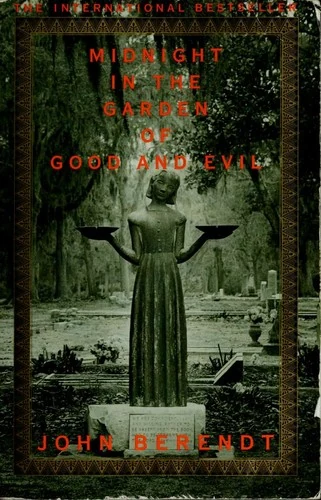
Read the decisions beneath the cover.
Keep the social world active around a central case: revisit concrete anchors with changed questions, and let the ensemble carry long intervals when the main action waits.
Especially useful for: Writers of reported narratives with a large cast, a distinctive place and a central event that unfolds over years.
How the decisions work together
The early chapters build independent lives and social hubs before the murder case becomes central. The invitation cards and Mercer House party return with new questions as circumstances change, while a montage carries the city through a long legal delay. The closing returns from courtroom resolution to the ensemble and the narrator’s view of Savannah. The author’s disclosure of changed timing limits claims about exact chronology.
- Establish the social world
Build recurring people, places and practices before the central case takes over.
- Let events change the questions
Return to invitations and gatherings as status becomes support and later exclusion.
- Keep the ensemble moving
Follow other lives during the long case, then reassemble them through familiar anchors.
2 decisions worth studying.
Start with the choice. Open its application and limits, or follow the source example.
Return to one concrete scene with a new explanatory job
Return to a recognizable setting and its decision artifact at successive turning points, making a new question change what readers can notice there.
Explore the decision, application & limits
Why this choice matters
The party and its guest cards give the book a concrete way to revisit status and loyalty. An invitation first displays social power; accepting it before trial becomes a public choice; sorting cards after acquittal brings changed relationships and the wider ensemble into the same action.
Try the decision in your own work
- Establish what the recurring setting or artifact means before the central disruption.
- Give each return a different question that depends on what has happened between appearances.
- Let concrete choices reveal the changed relationships, and distinguish a participant’s reading of them from the narrator’s conclusion.
Let the ensemble carry time while the central action waits
During a stated pause in the main action, move through short updates to the established social world, then return to the central thread when a specific development changes its situation.
Explore the decision, application & limits
Why this choice matters
A long period of imprisonment need not become an empty gap or a sequence of repetitive procedural updates. The local vignettes keep the city’s other lives active, and the later reversal makes the return to Williams legible. This is an interpretation of narrative function, not a measured effect on attention.
Try the decision in your own work
- Mark why the central action has entered a waiting interval.
- Select updates that change the surrounding world rather than filling the delay with unrelated curiosities.
- Use a definite development to rejoin the main thread, showing what the elapsed time has changed.
Every chapter has a job.
Choose a section to see what it adds and which authoring decisions it makes visible.
Afterward
A tour outside Mercer House prompts the narrator to reflect on what the city remembers and leaves out. The ending presents his view of Savannah’s inward-looking resistance to change.
Its job in the book
Return from the central case to the place that contains it.
A decision to study
Make the scale of the final interpretation clear and identify it as the narrator’s view.
Supplied text · lines 5416–5437. Summary and role are our analysis.
Link to this chapterThe book’s subject and overall argument
John Berendt’s first-person account builds a portrait of Savannah through houses, gatherings, conversations and a growing cast of acquaintances. Jim Williams and Mercer House form one center of that world, alongside Joe Odom, Chablis, Luther Driggers and others whose lives continue beyond any single plot. The shooting of Danny Hansford brings Williams’s successive trials into the center of the narrative.
The book keeps returning to the social world around the proceedings: invitations, gossip, performances, rivalries and daily routines change as the case develops. A final Christmas party brings the ensemble back together before the account closes on Williams’s death and the narrator’s interpretation of the city. The Author’s Note discloses pseudonyms and altered event timing, so the craft study treats the sequence as a constructed nonfiction narrative rather than a verified chronology.
An ensemble portrait precedes the central case; recurring social anchors and returns to independent lives keep the place larger than its legal plot.
Sources & reading scope
John Berendt, Midnight in the Garden of Good and Evil, First Vintage Books edition, July 1999; LF anchors in inspected extraction.
Read the complete existing whole-source AI synthesis, checked all 30 numbered chapter headings and selected chapter openings/endings, and directly inspected the original source passages supporting the retained lessons. Draft nominations were narrowed or rejected against that context and the author’s disclosure. This is an editorial source check, not a second complete reading or independent-model review.
- Berendt’s Author’s Note discloses pseudonyms and storytelling liberties, especially event timing, without identifying each altered scene. The study analyzes the published narrative arrangement rather than certifying exact chronology or dialogue.
- Reported testimony, local gossip, legal claims and supernatural interpretations remain attributed accounts; this pass does not resolve the killing or verify the historical record independently.
- The narrator’s selection, juxtaposition and commentary influence how attributed claims are read. Attribution is not a guarantee of neutrality, factual accuracy or freedom from responsibility.
- The supplied extraction was not compared against a publisher-controlled edition for completeness or layout.
- Effects on readers and the significance of structural choices are editorial interpretations; no audience, sales or longevity effect is established.
Editorial source check by Codex. No human or independent-model review is claimed. Chapter locations refer to the supplied transcription, not printed page numbers.