Unbroken
Follow one man’s survival through successive dangers and the consequences that continue after his physical return home.
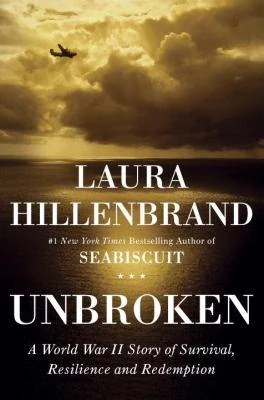
Read the decisions beneath the cover.
Give a long life story a concrete unresolved destination, and keep the sources’ disagreements inspectable where the narrative requires a choice or a limit on precision.
Especially useful for: Writers of biography and reported narrative that move through long preparation, successive ordeals and an aftermath supported by interviews and records.
How the decisions work together
The dated raft preface creates a future situation before the book returns to childhood. Running, air service and the crash then carry the chronology back to the suspended scene, after which captivity and the postwar aftermath become further movements. The chapter notes provide a separate evidentiary route, sometimes correcting competing reports and sometimes retaining uncertainty. Narrative arrangement and source confidence therefore remain related but distinct decisions.
- Place an unresolved scene ahead
Preview the raft attack, then make the temporal rewind to childhood clear.
- Reach and move beyond it
Develop the life and circumstances before returning to the attack and following its consequences.
- Extend both story and evidence
Continue into the aftermath while source notes disclose selected disagreements and decisions.
2 decisions worth studying.
Start with the choice. Open its application and limits, or follow the source example.
Preview a future crisis, rewind, then resume it
Open inside an identifiable later crisis, rewind to the earlier chronology, and eventually return to continue the same suspended scene.
Explore the decision, application & limits
Why this choice matters
The preface places a known athlete in a dangerous future situation before the life history begins. The reader carries an unfinished episode through the earlier chronology; when the book reaches it again, accumulated context and the continuation can give the return more work than repetition.
Try the decision in your own work
- Choose a bounded future scene with a clear person, time and unresolved development.
- Make the temporal move back legible, and select earlier material that gives the eventual scene more than a delayed outcome.
- Return to the promised situation and develop its consequences rather than simply repeat the teaser.
Show what disagreeing sources permit you to say
Identify conflicting source accounts, explain the basis for choosing among them or retaining uncertainty, and make the narrative’s degree of precision agree with that decision.
Explore the decision, application & limits
Why this choice matters
A smooth scene can conceal the uncertainty of its materials. Showing both resolved errors and unresolved discrepancies lets readers inspect a specific reporting choice instead of treating a source list as a blanket guarantee.
Try the decision in your own work
- Keep the competing versions and their provenance separate before drafting a single account.
- State the decisive evidence when choosing one version, and avoid false precision when the conflict remains unresolved.
- Place the needed uncertainty in the main text and give the fuller source comparison a traceable note.
Every chapter has a job.
Choose a section to see what it adds and which authoring decisions it makes visible.
Plundering Germany
The Olympic voyage and Berlin competition place Louie’s youth and mischief inside a wider political setting. The chapter joins performance, travel and the signs of violence around the Games.
Its job in the book
Make a public historical event part of one life’s experience.
A decision to study
Keep the participant’s immediate perspective distinct from what the narrator knows about the larger history.
Supplied text · lines 538–689. Summary and role are our analysis.
Link to this chapterThe book’s subject and overall argument
Laura Hillenbrand follows Louie Zamperini from a restless boyhood through running, the Berlin Olympics and service as an airman. A crash leads to the raft ordeal glimpsed in the preface, followed by capture and imprisonment. The narrative connects these movements to crewmates, fellow prisoners and family members who possess different pieces of the story.
Liberation begins another substantial movement rather than ending the book. The account follows Louie’s difficulties after returning home, his relationship with Cynthia, his reported religious change and later encounters with people and places from captivity. Chapter notes disclose some of the documents, recollections and conflicting versions behind the continuous narrative. This study examines that construction without independently validating its wartime or psychological claims.
A suspended future scene precedes a largely chronological life story whose apparent endings become transitions; source notes provide a second path for inspecting selected claims and uncertainties.
Sources & reading scope
Laura Hillenbrand, Unbroken, inspected Random House electronic text, copyright 2010, eISBN 978-0-679-60375-7; LF anchors in OCR-damaged extraction.
Read the complete whole-source AI synthesis and ordered segment section summaries, checked every numbered chapter heading against the supplied contents and body, inspected selected openings/endings, and directly checked the narrative and source-note contexts of all admitted examples. Draft overclaims and part-boundary errors were corrected. This is a source-checked editorial pass, not a second complete reading or independent-model review.
- The extraction has pervasive OCR damage, including split words, dropped letters/Roman numerals, duplicated text and a garbled opening of Chapter 39. Chapter headings use the clearer body form; part groupings are normalized from the contents divisions. No comparison with a publisher-controlled copy was completed.
- The inspected header identifies copyright 2010, Random House and eISBN 978-0-679-60375-7, not the filename’s 2014 trade-paperback edition. Exact correspondence to a print edition is unverified.
- The study analyzes a reported narrative and its handling of sources. It does not independently validate wartime testimony, reconstructed interior states or the book’s account of psychological and religious change.
- Reader effects are editorial interpretations rather than measured responses, and no sales or longevity effect is established.
- Source notes disclose some disagreements, but the author’s numerous Zamperini interview citations are undated. A visible citation or authorial account of verification is not an independent audit of its accuracy.
Editorial source check by Codex. No human or independent-model review is claimed. Chapter locations refer to the supplied transcription, not printed page numbers.