The Great Reset
Recognize the connections the authors see among contemporary policies and institutions, then consider their proposed ways to resist the concentration of power they describe.
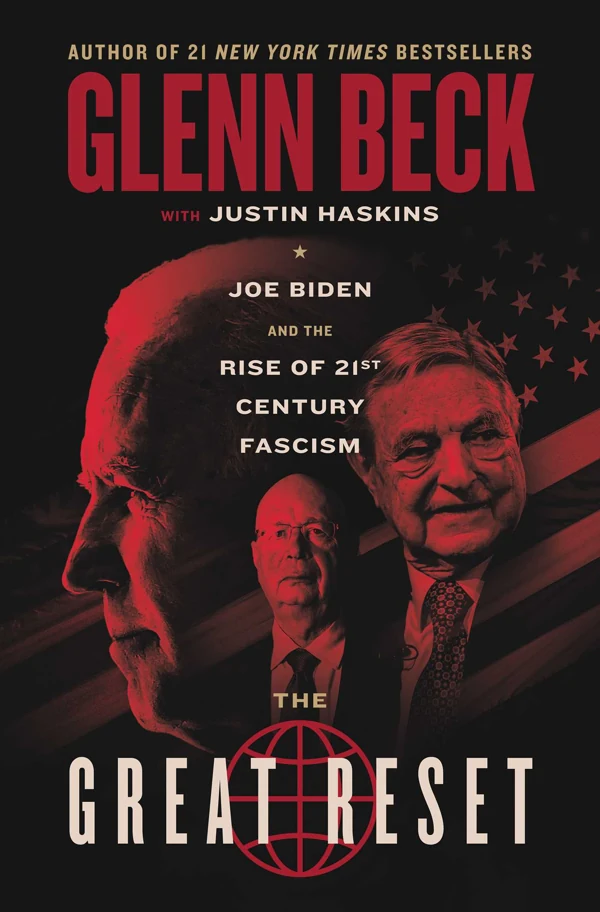
Read the decisions beneath the cover.
When changing a position, show the earlier statement and connect the revision to its stated grounds so readers can assess the change.
Especially useful for: Writers of continuing arguments who need readers to understand a change in their own position without asking for unearned trust.
How the decisions work together
Seven chapters connect the authors’ diagnosis of institutional power to political examples and proposed responses. The retained lesson is the opening chapter’s visible self-revision: an earlier quotation, later reported grounds and a changed scope of concern. The study does not validate the book’s allegations, forecasts or legal and economic claims.
- Pose a unifying question
Introduce questions the authors intend their larger thesis to connect.
- Build the proposed account
Move through crisis, climate, money and institutional mechanisms.
- Assemble the political case
Combine historical framing with eleven labeled exhibits inside Chapter 6.
- Give the reader a role
Close with proposed civic responses and a direct appeal, keeping intended effects distinct from demonstrated outcomes.
1 decision worth studying.
Start with the choice. Open its application and limits, or follow the source example.
Show the earlier claim when explaining a changed position
Retain an identifiable earlier account, connect it to a clearly later revision, and state what new evidence changes or leaves unresolved so readers can distinguish the two states of knowledge.
Explore the decision, application & limits
Why this choice matters
The quoted Prime-subscription joke gives the revision a precise target. Beck then names the actions he regards as grounds for changing his view and identifies the broader category he had neglected, so a reader can compare the two positions instead of relying on a generic assertion of humility.
Try the decision in your own work
- Identify and preserve enough of the earlier statement for the reader to understand the position being revised.
- Give the earlier statement a date or publication context, then name the new information the writer regards as grounds for revision.
- State the scope of the change and keep the new evidence’s limits separate from the fact that the writer changed position.
Every chapter has a job.
Choose a section to see what it adds and which authoring decisions it makes visible.
1. A Brave Terrifying New World
An imagined 2040 future precedes the introduction of the authors’ principal figures and working definition. Beck then quotes his earlier dismissal of corporate power and explains why he now considers that dismissal mistaken, before returning to the book’s warning.
Its job in the book
Establish the thesis and expose a specific change in the narrator’s position.
A decision to study
Preserve the earlier claim and name the grounds for changing it so the revision is visible.
Supplied text · lines 305–1464. Summary and role are our analysis.
Link to this chapterThe book’s subject and overall argument
Beck and Haskins argue that pandemic policies, climate initiatives, monetary theory, corporate governance and technology platforms are connected parts of a proposed concentration of power. Seven chapters move from an imagined future through the authors’ account of enabling conditions and institutions to American political examples and proposed civic responses. A large endnote section follows the concluding appeal to readers.
The retained writing lesson is a precise instance of visible self-revision. Beck reproduces a short statement from an earlier book, names the actions he now regards as reasons to reject its assumption and explains how his concern about concentrated power has widened. A reader can compare the earlier position with the revised one without treating that admission as proof of the book’s broader allegations.
The preface poses a set of questions that the book’s thesis promises to connect. Chapters on crisis, climate and money prepare the institutional argument; Chapter 6 combines historical framing with eleven lettered exhibits, and the final chapter shifts to civic and constitutional proposals and a direct appeal to the reader.
Sources & reading scope
Glenn Beck and Justin Haskins, The Great Reset, supplied 2022 Forefront Books/Mercury Ink text; inclusive LF anchors.
Passed live development-family and source-scope gates before source access. Read the complete whole-source AI synthesis and all five ordered segment summaries, section maps, observations, rejected candidates, qualifications and gaps. Matched the seven-chapter contents to epigraph/prose starts, explicit chapter transitions and endings, inspected the complete main close and the endnote/author-note boundaries, and checked the A–K exhibit sequence within Chapter 6. Read the retained corporate-power self-revision, its nearby caveats, the later Parler qualification and its two associated citation entries. This is a source-checked editorial pass, not a second full reading, independent review, original-source quotation audit or validation of the political, legal, economic or scientific claims.
- The supplied text identifies Forefront Books and Mercury Ink, copyright 2022, print ISBN 978-1-63763-059-4 and e-book ISBN 978-1-63763-060-0. It is not the Klaus Schwab/Thierry Malleret book with a similar title. No publisher-controlled copy was compared.
- Seven main chapters are identified in the contents and repeated document outline. Their display titles do not appear as body text; boundaries are identified by epigraphs, new prose starts and explicit next-chapter transitions. All seven substantive sections and the main ending are present, with no demonstrated missing prose continuation found at the inspected boundaries.
- Typography, cover and missing display-title designs were not inspected. Quotations, tables or layout features are evaluated only where their text survives; original linked materials and the separately cited earlier book were not opened.
- The text is a political polemic by Glenn Beck and Justin Haskins. Claims of coordination, intent, causal effects, forecasts and historical continuity remain attributed to the book; the study does not establish them as findings.
- Scientific, medical, financial, regulatory and constitutional statements belong to the supplied 2022 presentation. They are not current guidance, legal conclusions, forecasts endorsed by this study or independently validated accounts.
- Beck’s earlier Bezos statement is quoted by this book as coming from his 2020 work. The study verifies its presence here, not its exact form or context in the original work. The actions he cites as grounds for changing his position are likewise his reported grounds, not an independent fact-check.
- An explicit local revision does not validate the surrounding self-assessment of earlier predictions, the book’s larger theory, or its description of the evidence as incontrovertible. The later Parler section acknowledges content-moderation failures that qualify the opening portrayal.
- Author biographies are supplied end matter and are not verified current roles or credentials. Reader effects and writer usefulness are editorial interpretations; no causal reception, independent-review or untouched-holdout claim is made.
Editorial source check by Codex. No human or independent-model review is claimed. Chapter locations refer to the supplied transcription, not printed page numbers.