Make later revisions traceable to earlier claims
Retain an identifiable earlier account, connect it to a clearly later revision, and state what new evidence changes or leaves unresolved so readers can distinguish the two states of knowledge.
Annotated reissues and continuing inquiries where readers need to distinguish earlier knowledge from subsequent correction.
An explicit link between an earlier claim and a later revision can materially change how a reader interprets the retained narrative; the effect is editorial inference.
Identify the earlier statement, retain a distinguishable later layer and explain precisely what new evidence changes, including unresolved questions.
This edition lets readers encounter both the force of an earlier explanation and the findings that qualify it. A visible link gives the revision a specific target; it also reveals the cost of keeping an older account intact when a reader might miss the correction.
Every identified example.
4 source-checked examples from the published book studies. The full catalog has not been assessed for this practice.
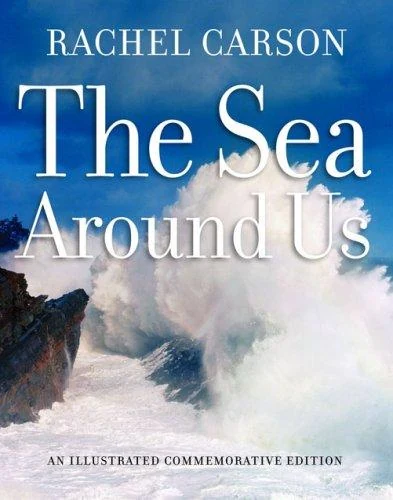
The Sea Around Us
Rachel Carson · 81 weeksAn early estimate and a later estimate remain separately visible
SHORT SOURCE EXCERPT“constantly undergoing revision”
The opening discussion offers a minimum Earth-age estimate tied to the oldest rocks then described and carries an asterisk. The linked note explicitly describes ongoing revision, adds older findings and presents a substantially longer possible age. The later account is identifiable rather than silently substituted into the original passage.
The paired passages make a changed estimate and its stated basis inspectable. They also demonstrate why the revision link matters: the main paragraph can convey a different temporal scale if read alone.
The Sea Around Us
Rachel Carson · 81 weeksThe later note reverses what is surprising about sediment depth
SHORT SOURCE EXCERPT“none seems wholly satisfying”
The main account emphasizes impressive sediment depths, variation and a snowfall analogy. The note linked from that discussion describes measurements over larger areas and says the more general puzzle is unexpected thinness. It offers possible explanations but leaves them unsatisfactory.
The later layer changes the question instead of merely adding another fact. Its unresolved close preserves the gap between having new observations and having an adequate explanation for them.
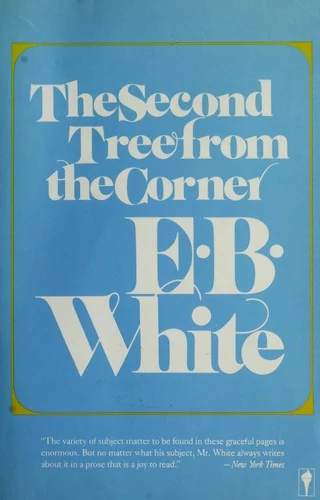
Second Tree from the Corner
E. B. White · 30 weeksIdentify the poem whose premise was overtaken
SHORT SOURCE EXCERPT“graphic evidence”
White says he wrote Song of the Queen Bee using information that artificial insemination had not been applied to bees. He then reports that a Life photographer supplied contrary evidence soon after publication. The poem remains in Nine Songs with its bulletin epigraph and queen-bee persona.
The correction has a precise target. Keeping the poem and naming what changed lets the reader separate a literary work’s original occasion from the state of knowledge the collecting author now reports.
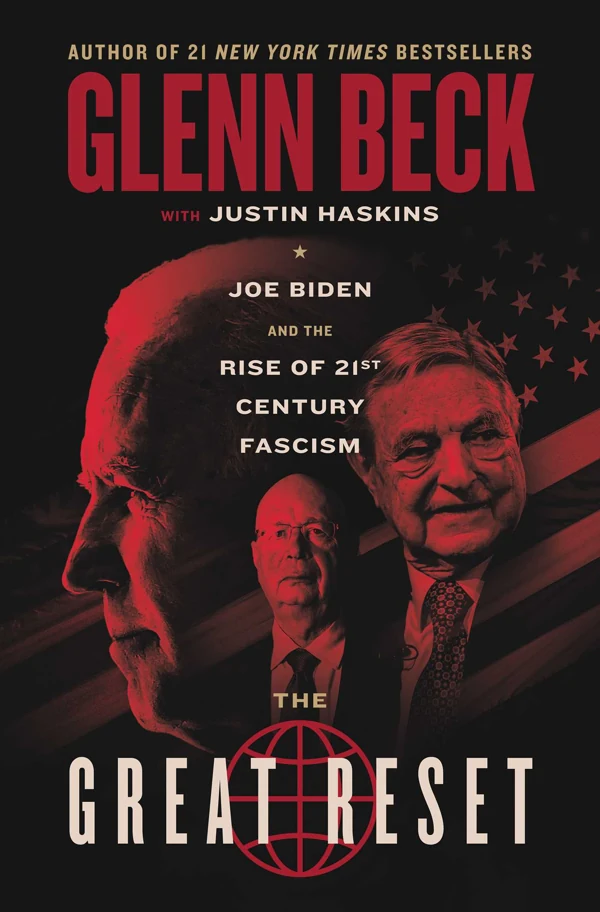
The Great Reset
Glenn Beck & Justin Haskins · 27 weeksA quoted 2020 joke becomes the target of the revision
SHORT SOURCE EXCERPT“Cancel your Amazon Prime subscription?”
Beck introduces the subject he says he underestimated: the danger posed by powerful corporations. He quotes his 2020 joke reducing Bezos’s power to canceling a Prime subscription, then cites the Parler shutdown, book restrictions and media influence as reasons he now considers that view inadequate. The following paragraph expands the concern from concentrated government power to corporate power.
The old sentence remains visible beside the new interpretation and its stated grounds. This gives the revision a specific scope: what powers the author had underestimated. The reader can inspect that change while separately assessing whether his examples support the larger political account.
Make the decision
deliberately.
Useful for an annotated reissue, a historical scientific work or a continuing inquiry where changes in knowledge are part of what the reader needs to understand.
- Identify the precise earlier claim affected by a revision, and give the revision a clear time or edition context.
- Make the connection easy to follow and state whether the change is a new estimate, a narrowed scope or an unresolved contradiction.
- Choose deliberately whether the old passage should remain visible; if retaining it could mislead, put the current qualification where a reader cannot reasonably miss it.
A near miss
A new preface says that knowledge has advanced but never connects the changes to the claims a reader will actually encounter.
Where the lesson stops
This operation is not a substitute for an up-to-date reference. Carson’s notes address selected claims, and their end-of-chapter placement is explained by this edition’s editorial note. The study does not establish that the complete 1951 text was preserved unchanged.
This is an editorial reading of craft. These examples do not establish that the practice caused, or predicts, a longer bestseller run.