Coming into the Country
Encounter several forms of Alaskan life closely enough to see why the same country produces conflicting desires and judgments.
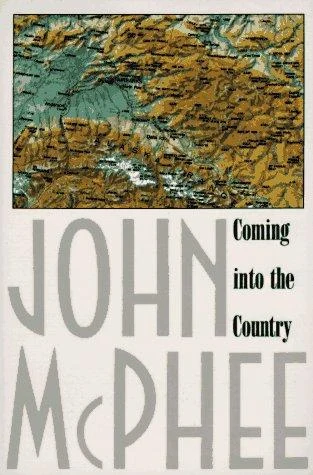
Read the decisions beneath the cover.
Give context a job inside the scene, and keep the particulars of disagreement visible without pretending the selection is neutral.
Especially useful for: Writers of reported narratives with dense background and a community whose members resist one shared verdict.
How the decisions work together
Three Books move from a river trip to a capital search and then to life around Eagle. A suspended bear encounter makes background relevant to a pending action; hearing exchanges and a contested reputation show how selected assessments can share one subject without reaching consensus. The source’s anonymity and the narrator’s disclosed sympathy remain part of the reading.
- Enter an encounter
Establish the immediate stakes before opening the contextual field.
- Keep a shared subject in view
Let its details connect competing judgments across voices.
- Make the reporter’s position visible
Preserve the selection, uncertainty and sympathies that shape the account.
2 decisions worth studying.
Start with the choice. Open its application and limits, or follow the source example.
Hold a scene open while its context changes the next move
Suspend an unresolved action, develop context directly relevant to its stakes or available choices, then explicitly return to the same moment and show the next decision or movement.
Explore the decision, application & limits
Why this choice matters
Background gains a concrete job when the reader is holding an unresolved situation in mind. In the bear passage, natural history and competing positions complicate both danger and reverence before the group chooses another route.
Try the decision in your own work
- Establish the immediate situation and the unresolved practical question.
- Select context that changes the grounds for understanding the risk, value or available choices.
- Signal the return to the same moment, then let the next action show what remains unresolved.
- Attribute competing claims and preserve their limits rather than using the pause to install a false certainty.
Put incompatible assessments close enough to compare
Arrange short assessments of the same person or proposal in a close sequence so that their specific incompatibilities remain visible, while identifying the setting and limits of the selection.
Explore the decision, application & limits
Why this choice matters
Readers can compare the grounds of admiration, criticism and competing priorities without receiving a single averaged characterization. The sequence makes disagreement an observable feature of the portrait, although the author still chooses its speakers and order.
Try the decision in your own work
- Keep a person, proposal or identifiable question constant across the sequence.
- Choose assessments whose particulars create a meaningful disagreement, rather than collecting interchangeable approval and disapproval.
- Supply the context in which the assessments arise and attribute speakers wherever the source allows.
- Keep anonymity, selection and unresolved factual allegations visible; do not imply equal evidentiary weight or representative coverage.
Every chapter has a job.
Choose a section to see what it adds and which authoring decisions it makes visible.
Book III: In the Bush — Coming into the Country
The longest Book builds a portrait of Eagle and the upper Yukon through people whose settlement, work, affiliations and land claims create conflicting relationships to the country. Contemporary journeys alternate with history and selected journal entries; the Gelvins, river residents, miners and members of the Village receive different kinds of attention. A letter home states the reporter’s sympathies, a winter 1977 return updates the standing cast, and the ending recalls an earlier newcomer whose later whereabouts remain unknown.
Its job in the book
Develop the social consequences of living in the country and disclose the reporter’s stake in its interpretation.
A decision to study
Preserve disagreement and mediation inside a community portrait; an accumulation of voices is still a composition.
Supplied text · lines 1105–3054. Summary and role are our analysis.
Link to this chapterThe book’s subject and overall argument
Three Books move through a river expedition, the search for a possible new capital and an extended portrait of life around Eagle and the upper Yukon. Each setting changes what is at stake in arguments about access, preservation, work and settlement, while the reporter remains a participant in what he describes.
The study focuses on two decisions: suspending a live encounter for context that bears on its next action, and placing incompatible assessments of a shared subject in close sequence. Both make a crowded subject readable, but neither removes mediation. The source includes anonymous voices, retrospective reconstruction and an explicit admission of the narrator’s sympathies.
The three named Books change the scale and mode of encounter: travel within wild country, inspection of possible urban development, and residence among people living with the consequences of settlement. Contextual excursions and selected voices supply arguments inside that movement; the final pages disclose a position and preserve an unfinished future.
Sources & reading scope
Supplied April 2011 eBook text: three main Books and end matter; credited maps absent.
Read the complete whole-source AI synthesis and the summaries, section maps, qualifications and gaps of all nine ordered source segments. Checked the contents and all three main Book headings, their openings and endings, edition statements and author-position disclosure. Directly inspected every retained passage through its setup, contextual excursion or quotation sequence, and return or surrounding qualification. This is a source-checked editorial pass, not a second complete reading or independent-model review.
- The supplied end matter identifies the first eBook edition as April 2011 (eISBN 9780374706074), with copyright 1976 and 1977 and original publication in 1977. The three main Books are present; no publisher-controlled copy was compared. Maps are credited but absent from this supplied text.
- Reported dialogue, scenes, historical accounts and natural-history statements are the book’s representations. This pass does not independently verify the reporting, quoted documents, sources or reconstructed events.
- Short quotation blocks sometimes omit individual speaker identities. They are selected editorial arrangements, not representative surveys, counts of distinct speakers or neutral transcripts of a community.
- Historical law, policy proposals and wildlife practices remain attributed and period-bound. The craft study does not endorse them as current legal, political or wilderness guidance.
- The narrator’s disclosed sympathy and choice of framing remain part of the account; a range of views does not remove the author’s influence. Reader effects are editorial inferences, not measured results or demonstrated explanations of sales.
Editorial source check by Codex. No human or independent-model review is claimed. Chapter locations refer to the supplied transcription, not printed page numbers.