Big Agenda
Give conservative readers the author’s account of the opposition and a strategy for pursuing his proposed agenda after the 2016 election.
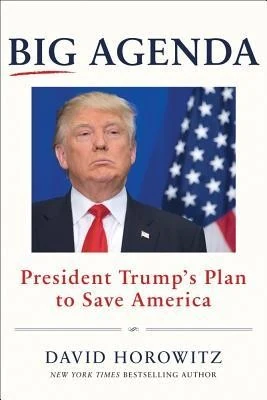
Read the decisions beneath the cover.
When a recommendation depends on changing a document, supply the wording, identify the additions and explain who would use it.
Especially useful for: Writers of procedural or policy books whose proposed actions need an inspectable document rather than only a general call for change.
How the decisions work together
Three parts move from the author’s political diagnosis to issue interpretations and a proposed strategy. The developed lesson studies one institutional amendment as a supplied piece of wording, with its additions and request process made explicit. The book’s political claims and predicted results remain unverified.
- Define the unfinished task
Explain why the intended audience still has work after the election result.
- Describe the opposition
Present the author’s account of the movement and its methods.
- Interpret policy issues
Use selected issues to apply the book’s organizing account.
- Specify the proposed response
Develop tactics and institutional proposals, then gather selected actions in the conclusion.
1 decision worth studying.
Start with the choice. Open its application and limits, or follow the source example.
Supply the wording of the proposed change
Move from a general recommendation to an example of the actual request, script, or form used to execute it.
Explore the decision, application & limits
Why this choice matters
The passage makes a proposed change inspectable at the level where it would be enacted: the sentence of a mission statement. The subsequent explanation identifies the additions, while the requester, recipient and follow-up give that wording a practical role. A reader can evaluate what the proposal asks an institution to change instead of receiving only a broad call for reform.
Try the decision in your own work
- Identify the practical decision the document is meant to carry out, then supply enough actual wording for that decision to be inspected.
- When adapting an existing document, distinguish the source wording from the proposed additions and retain a specific route to the original.
- Identify who is asked to use or authorize the wording and what follow-up is proposed; keep that procedure separate from evidence of its legitimacy or results.
Every chapter has a job.
Choose a section to see what it adds and which authoring decisions it makes visible.
4. Globalism and Radical Islam
The chapter moves from immigration and a reproduced sanctuary resolution through international and constitutional questions to campus speech examples. Horowitz treats these different subjects as parts of one conflict over sovereignty and individual rights.
Its job in the book
Gather several domains under the book’s unifying interpretation before the strategy section.
A decision to study
Make the relation among different domains explicit without treating thematic resemblance as causal proof.
Supplied text · lines 411–510. Summary and role are our analysis.
Link to this chapterThe book’s subject and overall argument
Horowitz organizes his political polemic into three parts: his account of the adversary, the agenda he attributes to it, and the strategy he proposes for conservatives after the 2016 election. Twenty-four short chapters move from diagnosis and selected policy examples to institutional proposals; a categorized first-hundred-days list and final appeal conclude the main text.
The developed craft lesson concerns the wording of one proposed institutional change. Rather than only calling for reform, Horowitz presents an adapted mission statement, identifies his additions and specifies who should request the change and seek follow-up. The study examines how that proposal becomes inspectable while leaving its diagnosis, authority and effectiveness unverified.
An introduction makes the election an unfinished starting point; three parts then identify an adversary, interpret policy issues and propose a response. Repeated returns to the same strategic goal connect the short chapters, while the conclusion gathers selected actions for reference.
Sources & reading scope
David Horowitz, Big Agenda: President Trump’s Plan to Save America, supplied 2017 Humanix Books text; inclusive LF anchors.
Passed live development-family and source-scope gates before source access. Read the complete whole-source AI synthesis and both ordered segment summaries, maps, observations, rejected candidates, qualifications and gaps. Matched the contents to all 24 chapter headings, inspected each chapter’s opening and closing prose, the introduction, complete conclusion and the notes/index boundaries. Read the retained proposed mission-statement amendment, its surrounding rationale, implementation request and qualification, and its citation entry. This is a source-checked editorial pass, not a second full reading, independent review, external quotation audit or validation of the political, historical or legal claims.
- The source title and copyright pages credit David Horowitz and identify Humanix Books, 2017, with hardcover and ebook ISBNs. Extra names in the filename are not treated as authors, and this text was not compared with an audio or publisher-controlled edition.
- The supplied text includes an introduction, all 24 numbered chapters across three parts, a substantive completed conclusion, notes and an alphabetic index. No demonstrated missing main-prose continuation was found at the inspected headings and endings. Complete supplied-input receipts do not independently certify a complete print edition.
- This is a political polemic written around the transition after the 2016 election. Its characterizations, statistics, allegations, constitutional interpretations and forecasts remain the author’s claims, not verified findings or current advice. The study neither endorses the program nor establishes its effectiveness.
- Some material is quoted from other writers, speeches, reported documents or prior works. Those original sources were not inspected, and their presentation in this book does not certify context, authenticity, independence or representativeness.
- The statement is already amended when the book presents it; the following explanation identifies the inserted words. The plain-text source does not preserve the claimed italics, and its note links only to Yale’s home page. The original statement, claims about other institutions, proposed authority and predicted results were not independently checked. This is proposed wording, not a demonstrated reform or an endorsement of the political program.
- Reader effects and writer usefulness are editorial interpretations. No reception, causal reader-response, independent-review or untouched-holdout claim is made.
Editorial source check by Codex. No human or independent-model review is claimed. Chapter locations refer to the supplied transcription, not printed page numbers.