Book architecture

One idea,
widening circles.

A book can grow by changing the scale of the question while keeping its central idea in view.

WHEN IT FITS

Consider this when one central idea needs to sustain several parts of a book without becoming repetitive.

POTENTIAL LEVERAGE

Changing the scale of the question gives later parts a new explanatory job while preserving a recognizable central thread.

BEYOND THE FAMILIAR ADVICE

Beyond keeping a consistent theme, each larger setting must introduce a constraint or question that the earlier setting could not reveal.

THE SHARED MOVE

Read down each column. The central concept stays in view while the scale of the question changes.

One practice. Every variation.

All 5 identified examples across 5 books.

Browse this collection
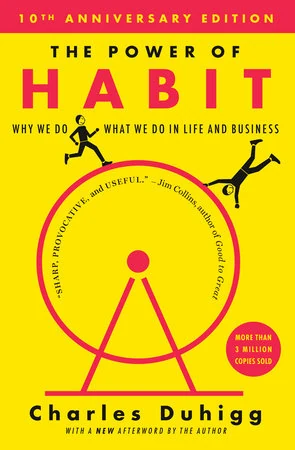
The Power of Habit book cover
TABLE OF CONTENTS

The Power of Habit

Charles Duhigg · 34 weeks

SELECTED PARTS, IN ORIGINAL ORDER

01

The Habits of Individuals

A personal behavior gives the reader a concrete starting point.

02

The Habits of Successful Organizations

The next part follows habits into workplaces and institutions.

03

The Habits of Societies

The final main part considers social movements and responsibility.

Think Again book cover
TABLE OF CONTENTS

Think Again

Adam Grant · 44 weeks

SELECTED PARTS, IN ORIGINAL ORDER

01

Individual Rethinking

The first part is about revising your own views.

02

Interpersonal Rethinking

The second part adds another person, whose mind you cannot change by yourself.

03

Collective Rethinking

The third part considers communities and cultures that support learning.

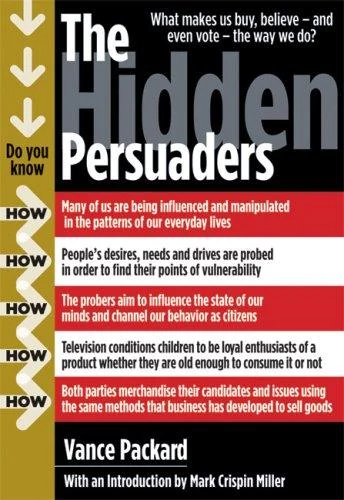
The Hidden Persuaders cover

The Hidden Persuaders

Vance Packard · 50 weeks

Campaign persuasion must confront the ability to withhold support

SHORT SOURCE EXCERPT
“citizens of a free society”
WHAT HAPPENS IN THE BOOK

After the previous chapter explicitly announces the move beyond merchandising, the political chapter distinguishes manipulation in a controlled society from influencing citizens who can reject a solicitation or vote a candidate out. It then describes campaign uses of advertising techniques and image construction.

THE AUTHOR’S DECISION

The new setting changes the problem of persuasion: what is sought is political support from an audience described as able to refuse it. The book can therefore carry its central concern forward without treating the political chapter as only another product category.

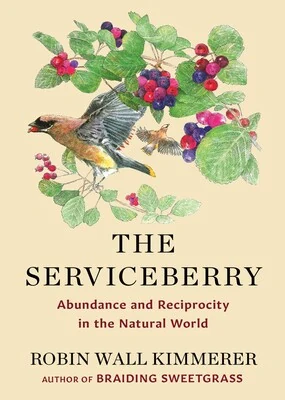
The Serviceberry cover

The Serviceberry

Robin Wall Kimmerer · 32 weeks

Passing a book becomes a test of neighborhood and civic sharing

WHAT HAPPENS IN THE BOOK

Kimmerer moves from giving a book to a friend, to a Little Free Library, to a public library. At civic scale, she names taxes as a reason the institution is not exactly a gift economy; the following farm-stand theft raises the problem of trust when a shared resource is misused.

THE AUTHOR’S DECISION

Increasing scale produces new questions about funding, obligation and rule-breaking. The qualification helps the enlarged example develop the idea rather than simply multiply illustrations.

Under the Sea-Wind cover

Under the Sea-Wind

Rachel Carson · 19 weeks

The waiting eels lead into the coast’s longer cycle

SHORT SOURCE EXCERPT
“a moment in geologic time”
WHAT HAPPENS IN THE BOOK

The closing passage follows elvers waiting offshore and projects their coming movement into rivers. It then makes the sea itself a waiting presence and treats the current relation of water, coastal plain and mountain ranges as temporary.

THE AUTHOR’S DECISION

The comparison keeps waiting and return in view while changing the timescale. Its consequence is concrete: places that seem stable within an animal’s life, including settlements, enter the larger process of erosion and changing coastlines.

The original pair shows exact part headings; Think Again also has a concluding fourth part. Additional examples may show the same operation within another form. Read each source context for its scope. Every match identified in the reviewed material is included here; the rest of the source collection remains to be assessed. Craft comparisons do not establish a longevity effect.

GO DEEPER

How can one idea sustain a whole book?

A book can grow by changing the scale of the question while keeping its central idea in view.

How to inspect this in your own writing

Trace the operation through the actual sequence of the book. Check whether each recurrence changes what the reader can understand or do.

THE BOUNDARY

When this becomes a near miss.

A bigger setting must reveal a new problem or constraint. Repeating the same advice under broader labels adds length without adding insight.

Read the research approach