Synchronize separate timelines around the same question
Establish separate chains of action, explicitly align their dates or intervals, and compare what different participants are doing or understanding about the same consequential question.
Useful when people in different places make independent decisions that converge on one event or problem.
Repeated time alignment can connect many local scenes into one intelligible account of differing knowledge and action.
Alternating viewpoints is insufficient unless the reader can locate them in time and see the consequential question they share.
A reader can see the gap between preparation and perception without receiving each side as a separate story to reconstruct afterward. Repeated alignment gives a long distributed history a usable structure; the comparisons remain selected interpretations.
Every identified example.
4 source-checked examples from the published book studies. The full catalog has not been assessed for this practice.
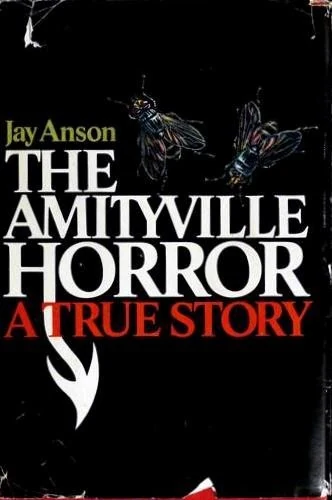
The Amityville Horror
Jay Anson · 40 weeksAlign the two sides of an unanswered call
SHORT SOURCE EXCERPT“It was exactly seven.”
After a period when Mancuso feels better while working, the narrative switches between telephone static at the rectory and at the house. George tries the priest’s number and checks a clock at seven; the next paragraph places Mancuso’s temperature and pulse check at the same hour. The reader sees each side while George is still unsure whether the priest was calling.
The shared hour makes the cut between locations legible, and unequal information gives the comparison a job. The text invites readers to connect renewed distress in separate places, but the formal connection supplies no independent test of that interpretation.
The Amityville Horror
Jay Anson · 40 weeksCompare relief and fear after the flight
SHORT SOURCE EXCERPT“at the very moment”
The chapter announces that Mancuso decides to leave town as the family flees. Their later call reveals that he had not realized they stayed another night; the narrative then shows his renewed distress and abrupt disconnection while George cannot understand his reaction. Mancuso brings his trip forward, extending the two strands’ different responses to the same reported danger.
Alignment makes the difference in knowledge available to the reader rather than to both characters. Their departures become connected responses with different motives and understandings; the later conversation adds more than a coincidental clock match.
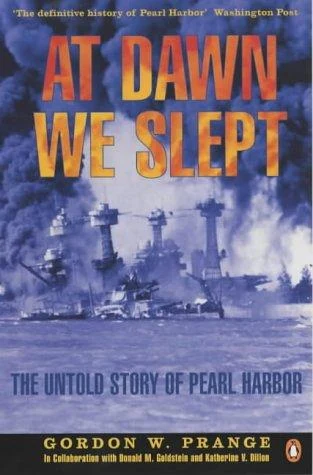
At Dawn We Slept
Gordon W. Prange & Donald M. Goldstein & Katherine V. Dillon · 19 weeksPut an American warning beside the developing Japanese plan
SHORT SOURCE EXCERPT“How closely interwoven were the American and Japanese threads of the Pearl Harbor fabric!”
After following American readiness concerns, the account pauses to align Richardson's and Knox's documents with Yamamoto's letters and meeting. The paragraph uses qualified intervals rather than pretending every date is equally certain.
The comparison lets the reader see recognition of a possible attack alongside preparation for that attack. The next paragraph complicates the pattern with a later American dismissal of the warning.
At Dawn We Slept
Gordon W. Prange & Donald M. Goldstein & Katherine V. Dillon · 19 weeksMake shallow-water torpedoes the shared question
The chapter interrupts Japanese torpedo training with Ingersoll's June memorandum warning against assuming shallow water gives protection. It then places Kimmel's continuing doubt beside Genda's own technical difficulty and determination to solve it.
Because both tracks face the same concrete constraint, their alignment reveals a difference in response rather than offering coincidence alone. The technical problem carries the transition between countries.
Make the decision
deliberately.
A history or reported narrative follows people in different places whose independent decisions converge on the same event or problem.
- Choose a consequential question that both timelines actually address, such as a technical possibility or a warning.
- Establish each sequence on its own terms, then provide an explicit date or qualified interval when you bring them together.
- Compare what each participant knew and did; mark approximate timing and avoid implying that coincidence proves contact or cause.
A near miss
Alternate locations for variety while leaving the reader to reconstruct when the scenes occurred or why their proximity matters.
Where the lesson stops
The source sometimes calls these parallels strange or invokes telepathy. The admitted operation is dated comparison, not that rhetoric or proof of a causal link. Later knowledge must not be assigned to actors who lacked it.
This is an editorial reading of craft. These examples do not establish that the practice caused, or predicts, a longer bestseller run.