A received core is separated from its development
When introducing a retelling, identify the received core or version and its source, then state how the present author has developed or changed it.
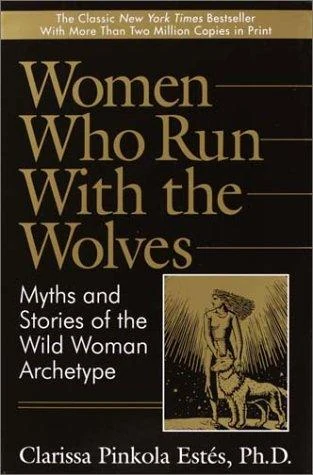
Women Who Run with the Wolves
Clarissa Pinkola Estés · 99 weeksA received core is separated from its development
Before Three Gold Hairs, Estés identifies Tante Kata as the person from whom she received the tale’s core and says she developed its substance. The discussion then moves to the motif and the use she makes of it in the chapter on creative life.
Calling the received material a core gives the attribution a scope. The adjacent admission of development helps readers distinguish a line of transmission from a claim that this telling is an unchanged source document.
The source in context.
La Llorona and a polluted river open a discussion of creative life. Within the same source chapter, The Little Match Girl and Three Gold Hairs address fantasy, depleted attention and renewal; they are not a separately numbered chapter in this extraction.
Open this chapterWhat this example supports
Calling the received material a core gives the attribution a scope. The adjacent admission of development helps readers distinguish a line of transmission from a claim that this telling is an unchanged source document.
Its limit
This is original paraphrase of the Bulgarian passage. The wording supports a disclosed expansion, but neither specifies all alterations nor independently verifies the tale’s lineage or the archetypal meaning assigned to its motif.
Source & edition
Clarissa Pinkola Estés, Women Who Run with the Wolves, inspected Bulgarian translation credited to Krum Bachvarov (2001), Bard (2010), ISBN 954-585-212-7; 1-based LF anchors in the supplied extraction.
Supplied text, lines 11537–11558. The description is an original editorial paraphrase, not a quotation.
Read the complete whole-source AI synthesis and the ordered summaries and section maps of all ten submitted segments; checked the supplied contents against every main body heading and inspected section openings and endings. Directly read the Vasilisa and Red Shoes tales and selected subsequent interpretations, the admitted provenance passages and their surrounding contexts, and relevant author-method and qualification passages. English descriptions are this editorial pass’s paraphrases of the Bulgarian source. This is a source-checked editorial pass, not a second complete reading, specialist translation review or independent-model review.
Inspected Bulgarian translation credited to Krum Bachvarov (2001), Bard (2010), ISBN 954-585-212-7; original copyright notices 1992 and 1995. Numbering and extraction anomalies retained; correspondence to an English edition unverified.