Manawee is introduced as an expanded gift
When introducing a retelling, identify the received core or version and its source, then state how the present author has developed or changed it.
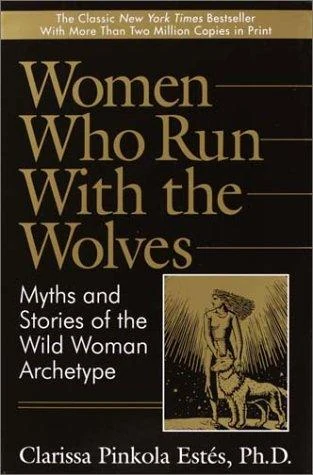
Women Who Run with the Wolves
Clarissa Pinkola Estés · 99 weeksManawee is introduced as an expanded gift
SHORT SOURCE EXCERPT“която аз доразвих в разказ. Нарекох го „Манауи“.”
Immediately before Manawee begins, Estés says that V. B. Washington gave her a short African American tale, which she developed into a story and named Manawee. The introduction therefore distinguishes the received brief tale from the version being presented.
The source credit and the author’s transformation appear together. A reader is given a more precise account of mediation than an anonymous appeal to tradition or a source name without an adaptation disclosure.
The source in context.
Manawee’s effort to learn the names of two sisters, aided by a repeatedly distracted dog, becomes a discussion of the author’s idea of women’s dual nature. Before the tale, Estés names its giver and says she developed the brief story into this retelling.
Open this chapterWhat this example supports
The source credit and the author’s transformation appear together. A reader is given a more precise account of mediation than an anonymous appeal to tradition or a source name without an adaptation disclosure.
Its limit
The quotation is from the Bulgarian translation. This study verifies the author’s statement, not the encounter, permission, the earlier version or the historical classification; individual additions are not itemized.
Source & edition
Clarissa Pinkola Estés, Women Who Run with the Wolves, inspected Bulgarian translation credited to Krum Bachvarov (2001), Bard (2010), ISBN 954-585-212-7; 1-based LF anchors in the supplied extraction.
Supplied text, lines 4571–4578. The short quotation is checked against the source.
Read the complete whole-source AI synthesis and the ordered summaries and section maps of all ten submitted segments; checked the supplied contents against every main body heading and inspected section openings and endings. Directly read the Vasilisa and Red Shoes tales and selected subsequent interpretations, the admitted provenance passages and their surrounding contexts, and relevant author-method and qualification passages. English descriptions are this editorial pass’s paraphrases of the Bulgarian source. This is a source-checked editorial pass, not a second complete reading, specialist translation review or independent-model review.
Inspected Bulgarian translation credited to Krum Bachvarov (2001), Bard (2010), ISBN 954-585-212-7; original copyright notices 1992 and 1995. Numbering and extraction anomalies retained; correspondence to an English edition unverified.