On the Road with Charles Kuralt
Meet the particular lives and practices Kuralt selects from the back roads, and discover the humor, care and persistence that he believes a narrower view of public events misses.
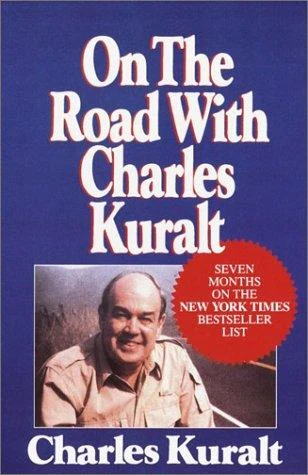
Read the decisions beneath the cover.
A collected book needs a useful level between its title and its individual pieces: a short group introduction can supply that relationship while the pieces keep their local life.
Especially useful for: Writers and editors assembling independent journalism, essays or profiles into a thematic book.
How the decisions work together
Kuralt adds new chapter frames to a varied body of broadcast work. Those frames connect the portraits through service, craft, continuity, memory and season, while speaker labels and local openings retain the pieces’ separate identities. The transferable decision is the added layer of explanation, not a claim that all pieces have one form or prove a national thesis.
- Explain the working posture
The Foreword describes a roaming, collaborative reporting practice and a taste for back-road particulars.
- Frame each thematic group
Nine introductions give the collections of pieces different relations to explore.
- Keep the local encounter
Titles, places, voices and varied forms give individual pieces their own entry points.
- Move toward memory and season
Historical places and seasonal rituals provide the final groups, ending in an explicit interpretation of the roadside tree.
1 decision worth studying.
Start with the choice. Open its application and limits, or follow the source example.
Give a collection’s groups their own framing introductions
Place a distinct introduction before a thematic group of previously separate pieces, establish a shared question or relation, and let the pieces retain their own local openings and forms.
Explore the decision, application & limits
Why this choice matters
The collection gains a level of explanation between its title and its individual pieces. A short frame can tell readers why these works belong together while leaving the details and voices available for more than one response. This is an interpretation of the architecture, not evidence that every reader accepts the proposed unity.
Try the decision in your own work
- Select a group because its actual pieces share a useful question, relationship or tension; check the outliers before naming the frame.
- Write an introduction that adds the relationship readers need, rather than summarizing every piece or prescribing a single verdict.
- Preserve the pieces’ local entry points and meaningful differences in form. Identify adapted or newly added material and explain what the collection cannot claim from its selection.
Every chapter has a job.
Choose a section to see what it adds and which authoring decisions it makes visible.
TALL TALES AND DREAMERS
A brief introduction prepares readers for exuberance and improbable undertakings. Nine pieces range from explicitly tall weather stories and jackalopes to roads, bridges and boats; later returns within some accounts complicate the first impression of a dream.
Its job in the book
Allow exaggeration and ambition to sit together without making them the same evidence type.
A decision to study
Signal a change of factual or comic register where the collected material calls for it.
Supplied text · lines 3982–4939. Summary and role are our analysis.
Link to this chapterThe book’s subject and overall argument
Kuralt collects broadcast-derived pieces about people, places, work and customs encountered along American back roads. Nine thematic chapters move through quiet service, independence, enthusiasm for craft, extravagant dreams, small towns, transmission between generations, everyday curiosities, historical places and the seasons. Narration alternates with attributed speech and occasional sound or action directions, preserving traces of the pieces’ television form.
The added chapter introductions give the collection a shape beyond the itinerary of the reporting. Each supplies a way of approaching the next group, from the kindness overlooked by front-page news to knowledge passed through the hand and eye. The individual pieces still open locally and vary in tone and form. Some add later developments; the final Christmas-tree piece turns its solitary roadside subject into an explicit statement of hope.
Place a distinct framing essay before each thematic group, then let separately titled, usually location-labeled pieces develop that theme through local scenes and voices. The sequence progresses from character and work toward public memory and seasonal ritual without claiming to survey the country systematically.
Sources & reading scope
Charles Kuralt, On the Road with Charles Kuralt; Inspected G. P. Putnam’s Sons text: 1985 copyright by CBS Inc.; Foreword and chapter introductions copyright 1985 Charles Kuralt; jacket marked Book Club Edition.
The completed synthesis and all four segment summaries, maps, qualifications and gaps supplied candidates and coverage information. This Codex pass checked live family and source-scope gates before source access, source identity and copyright, every chapter introduction and ending, all 92 contents-to-body piece headings, and the complete contexts of each admitted example. Current canonical definitions, staged peers and base examples were checked; draft errors and overgeneralizations were corrected privately. This is source-checked editorial review, not a new independently adjudicated whole-book reading.
- No human or independent-model review has been completed.
- The local extraction has not been compared page by page with a publisher edition; graphical layout and completeness are not independently certified.
- The book’s empirical and historical claims are described as claims made by the author, not independently verified findings of this study.
- Proposed effects on readers are editorial interpretations, not measured comprehension, behavior or longevity effects.
- The supplied filename says 1995, but the inspected pages give 1985 copyright statements and a Book Club Edition jacket. No 1995 printing is claimed. CBS Inc. is credited for the collected material and Kuralt separately for the Foreword and chapter introductions; the acknowledgments credit a substantial production team.
- All nine chapters, 92 listed pieces and the final substantive prose are present in the extraction. Some interstitial image or decorative regions are unreadable OCR; sign spellings and photographs cannot be independently certified from this text. No admitted lesson depends on image composition.
- The book preserves speaker labels and production directions, but this review has not compared the printed versions with recordings or original scripts. Exact broadcast dates, editing and verbatim fidelity are not generally established here.
- Publisher flap copy and endorsement quotations are kept outside the author’s main prose. Reported historical speeches lack enough visible sourcing here to distinguish attested words from reconstruction; they do not support a quotation-based craft lesson.
- The portraits are selected examples and the claims about American life belong to Kuralt’s narration. They are not a representative survey or independent findings about the places, communities or people described.
- The Thoreau quotation at the close of Different Drummers’ introduction has an unreadable final line at LF1573. That quotation is not retained as evidence; the chapter framing and local pieces are otherwise identifiable.
Editorial source check by Codex. No human or independent-model review is claimed. Chapter locations refer to the supplied transcription, not printed page numbers.