The Fire from Within
Follow the narrator’s account of learning a system of awareness through explanation, encounters, mistakes and returns, culminating in the departure that the Foreword asks the teachings to explain.
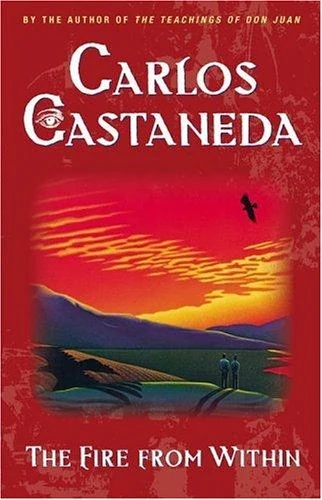
Read the decisions beneath the cover.
Give a correction something specific to change: the learner’s mistaken picture or the teacher’s expectation, followed by a visible difference in the learning sequence.
Especially useful for: Writers of teaching dialogues and reflective narratives where misunderstanding and revision are part of the reader’s route through difficult ideas.
How the decisions work together
The book presents a curriculum through conversations, reported encounters and returns to earlier experiences. Two strong local decisions make revision visible: the learner names a wrong spatial picture before receiving a replacement, and the teacher admits that a striking experience did not supply understanding by itself. These operations concern how the narrative presents learning. The source’s recovered-memory frame, attributed cosmology and unresolved coda limit any claim of factual or educational validation.
- Frame the recovered curriculum
The Foreword names the three masteries, selects awareness and ties the volume to the announced departure.
- Build and revise the vocabulary
Dialogue and scenes develop terms while exposing misleading pictures and disputed interpretations.
- Return to the learning process
Embedded stories and remembered encounters reveal the teachers’ methods and the limits of immediate experience.
- Complete the action, retain the doubt
A final test and departure return to the opening promise, followed by a coda that leaves verification unresolved.
1 decision worth studying.
Start with the choice. Open its application and limits, or follow the source example.
Let a failed expectation improve the explanation
Present a plausible explanation or expectation, show the observation or evidence gap it cannot account for, and return to the same question with a revised account that changes the later interpretation or application.
Explore the decision, application & limits
Why this choice matters
The text gives each correction a visible job. One replaces the spatial picture blocking further explanation; the other makes a teacher revise the expectation that a remarkable experience is enough. Readers can identify what changed and how the narrative uses it afterward, without accepting the teachings as verified.
Try the decision in your own work
- State the earlier explanation or expectation and why it seemed plausible.
- Identify the specific observation, objection or lack of evidence that requires a change, and credit its source.
- Return to the same question with the revised account; show how that revision changes the interpretation or later application.
Every chapter has a job.
Choose a section to see what it adds and which authoring decisions it makes visible.
Epilogue
The group gathers for a final explanation contrasting the pursuit of prolonged existence with the total freedom the new seers seek. The narrated jump and departure are followed by a coda that retains elation, doubt and an unmet need to verify the teachings.
Its job in the book
Return to the promised departure and preserve the account’s unresolved status.
A decision to study
Let the final qualification remain part of the ending rather than treat the climax as complete confirmation.
Supplied text · lines 4707–4763. Summary and role are our analysis.
Link to this chapterThe book’s subject and overall argument
Castaneda presents a sequence of encounters in which don Juan explains the mastery of awareness to an apprentice narrator. The Foreword frames the material as recovered teachings from a state of heightened awareness and distinguishes it from accounts of ordinary awareness. Dialogue, reported experiences and stories of earlier teachers develop a vocabulary of perception, including emanations, attention and the assemblage point. The contrast between old and new seers organizes the text’s account of what earlier practitioners misunderstood or pursued for the wrong reasons.
Learning in the narrative is repeatedly less secure than an impressive experience first suggests. The teacher corrects a misleading mental picture, revises his own expectation that seeing would produce understanding, and returns the narrator to experiences under a different account. The closing chapters move toward unaided action and the departure announced in the Foreword, while the final coda retains doubt and the need for verification. These are features of the presented narrative and teachings, not established anthropology, psychology or supernatural fact.
Frame the volume as a recovered curriculum, establish a contrast between inherited and revised teaching, and develop increasingly specific terms through dialogue and narrated encounters. Revisit experiences to change their interpretation, then bring the curriculum toward a final test while retaining uncertainty in the coda.
Sources & reading scope
Carlos Castaneda, The Fire from Within; Inspected text with internal copyright 1984 by Carlos Castaneda; the filename’s 1991 Washington Square Press edition is not established by a publisher or copyright page in this file.
The completed whole-source synthesis and all six ordered segment summaries, section maps, qualifications and gaps supplied candidate observations. This Codex pass checked live family and source-scope gates before source access; inspected internal title and copyright notices, the complete Foreword, all eighteen exact numbered headings and their chapter openings and endings, the complete final chapter and Epilogue; and read both admitted contexts and their qualifications. Current canonical definitions, staged peers and base examples were compared. This is source-checked editorial review, not a second independently adjudicated whole-book reading.
- No human or independent-model review has been completed.
- The local extraction has not been compared page by page with a publisher edition; graphical layout and completeness are not independently certified.
- The book’s empirical and historical claims are described as claims made by the author, not independently verified findings of this study.
- Proposed effects on readers are editorial interpretations, not measured comprehension, behavior or longevity effects.
- The encounters, lineages and teachings are attributed to Castaneda’s narrative and its speakers. The analysis does not establish their ethnographic authenticity, historical accuracy, psychological mechanisms or supernatural reality.
- The Foreword presents a process of recollection from heightened awareness. That framing does not independently establish how the author composed the book, the accuracy of dialogue or memory, or continuity with other books that were not inspected in this pass.
- The supplied text has an internal 1984 copyright statement but no publisher title/copyright page establishing the filename’s 1991 Washington Square Press edition. Bracketed dictionary glosses and divider lines have uncertain editorial provenance.
- The final coda explicitly retains doubt and says verification remains ahead. Narrated demonstrations and the climactic jump do not constitute independent tests of the teachings.
- Corrections to a visual model and to a teaching expectation are observable within the narrative. They are not evidence that the revised cosmology or learning method is empirically sound.
- The passage about a movement in depth corrects the narrator’s surface-ribbon picture and explains why an older expression remains. Later chapters still use lateral shifts; the study does not claim a complete terminological reconciliation.
Editorial source check by Codex. No human or independent-model review is claimed. Chapter locations refer to the supplied transcription, not printed page numbers.