Trace a familiar object through its hidden history
Choose a familiar object, follow its material or production through several explanatory stages, and return to the object with those stages now visible.
Useful when a science, history or systems explanation must connect several unfamiliar mechanisms to an ordinary object with a supportable chain of origins or production.
One continuing object gives several technical passages a shared question. The eventual return can connect the remote process to something the reader already recognizes, as an interpretation of the explanation rather than a measured learning effect.
Beyond starting with something familiar, carry the same object’s actual material or production relation through several mechanisms and return to it with an answer. This changes which technical stages belong and how transitions are made.
One continuing object gives several technical passages a shared question. The eventual return can connect the remote process to something the reader already recognizes, as an interpretation of the explanation rather than a measured learning effect.
Every identified example.
1 source-checked example from the published book studies. The full catalog has not been assessed for this practice.
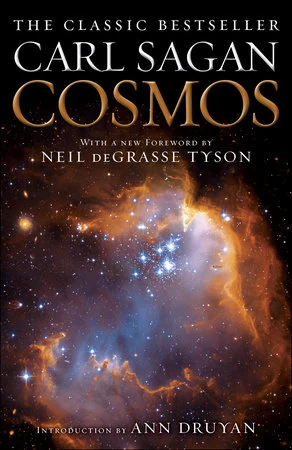
Cosmos
Carl Sagan · 70 weeksAn apple pie acquires a stellar history
SHORT SOURCE EXCERPT“the carbon in our apple pies”
The chapter begins with a pie’s ingredients and asks where their atoms came from. Cutting the imagined pie down to an atom introduces structure and nuclear change; later, the discussion of stellar reactions and expelled matter returns to the carbon in the pie.
The object remains connected to the subject through a claimed material history, rather than serving only as a colorful analogy. The return gives the intervening discussion of stellar processes a concrete answer to deliver.
Make the decision
deliberately.
Useful when a science, history or systems explanation must connect several unfamiliar mechanisms to an ordinary object with a supportable chain of origins or production.
- Choose an object whose material or production actually connects the mechanisms you need to explain.
- Make each transition answer the next question about that same object.
- Return to the object after the explanation and state what the chain now lets the reader understand.
A near miss
An everyday object appears in the opening and closing but the intervening explanation never traces its connection to the processes discussed.
Where the lesson stops
The continuity must be supported; an evocative resemblance is not a material history. The book’s compressed account of element origins is treated here as its explanation, not a current comprehensive account of nucleosynthesis.
This is an editorial reading of craft. These examples do not establish that the practice caused, or predicts, a longer bestseller run.