Give the reader a standard before judging competing accounts
State explicit criteria for accepting or revising an account early, then invoke those same criteria when assessing later rival accounts and the author’s preferred explanation.
A sustained comparison of accounts whose provisional status would otherwise feel like a succession of disconnected reversals.
One explicit standard can organize judgments in several chapters and constrain treatment of the author’s favored account.
Install the criteria before the disputes, reuse them on rival and preferred explanations, and separate a testable account from a confirmed or uniquely supported one.
The repeated standard gives a long sequence of disagreements a common question: what observation or prediction warrants this judgment? That can make revisions easier to follow without requiring the reader to equate scientific merit with permanent correctness.
Every identified example.
3 source-checked examples from the published book studies. The full catalog has not been assessed for this practice.
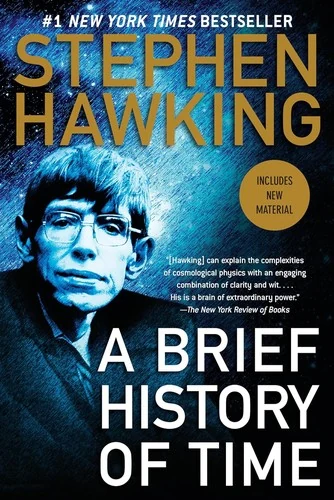
A Brief History of Time
Stephen Hawking · 112 weeksTwo criteria, followed by a theory that survives as an approximation
Hawking defines a useful scientific theory through its explanatory economy and definite predictions, then describes provisional acceptance and possible disconfirmation. The Mercury example explains why Newton’s theory can remain practically useful after Einstein improves its predictions.
The author supplies the rule before the later disputes and immediately prevents a crude true-or-worthless reading of revision.
A Brief History of Time
Stephen Hawking · 112 weeksA rejected theory still earns the stated scientific standard
SHORT SOURCE EXCERPT“good scientific theory”
The steady-state theory is explicitly credited with simplicity and testable predictions in the Chapter 1 sense. The discussion then connects radio-source counts and microwave radiation to predictions the theory did not meet.
Applying the standard to a rival separates a good investigable theory from a theory the book ultimately accepts.
A Brief History of Time
Stephen Hawking · 112 weeksThe preferred proposal returns to the same criterion
Hawking connects fluctuations permitted by the no-boundary proposal to the structure of the early universe and the COBE observations. He explicitly revisits the Popper criterion when characterizing the proposal.
The repeated evaluative language lets readers ask whether the preferred proposal has earned the same kind of assessment used for the rejected alternative. The foreword’s qualification about distinguishing alternatives is necessary context.
Make the decision
deliberately.
Useful when a nonfiction book compares theories, interpretations or proposals and readers need to evaluate changing conclusions across chapters.
- Specify the criteria and the sort of evidence that would count against an account before the hardest dispute.
- Apply the same criteria to a rival account and your own preferred explanation; separate being testable from being established.
- Return to the criteria at later decisions and disclose where the reader cannot inspect the underlying evidence.
A near miss
A declaration of open-mindedness that supplies no criteria, or criteria invoked only when criticizing an opponent.
Where the lesson stops
The stated criteria are Hawking’s simplified philosophical account. Calling a theory testable does not prove it true, and the foreword explicitly says further observations are needed to distinguish the no-boundary proposal from alternatives.
This is an editorial reading of craft. These examples do not establish that the practice caused, or predicts, a longer bestseller run.